
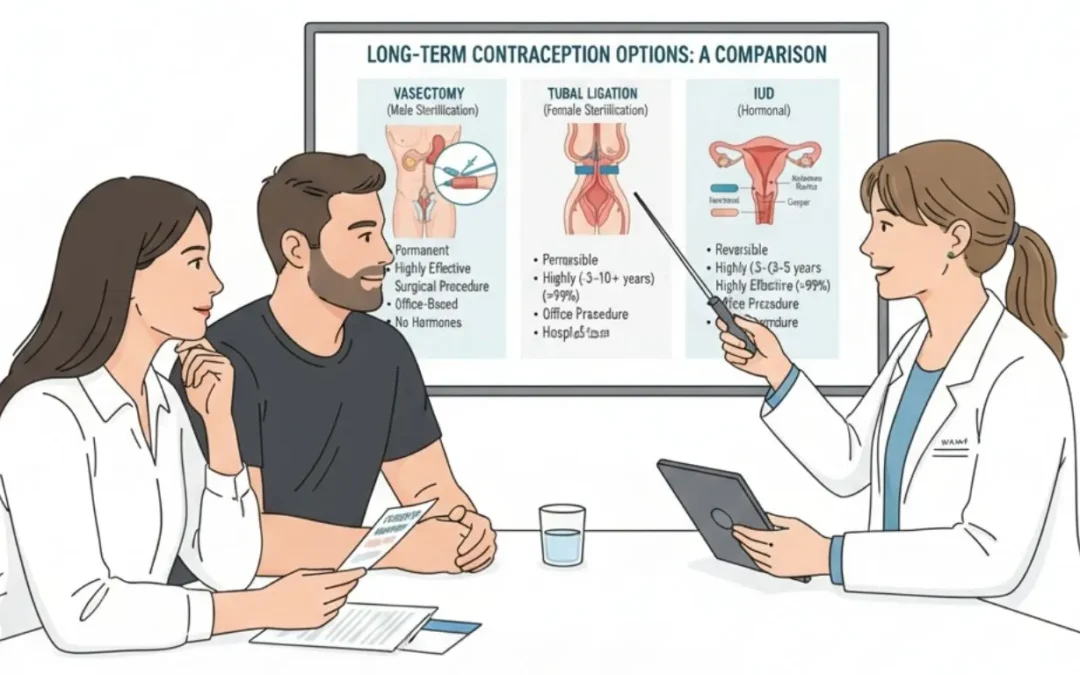
Vasectomy vs birth control options are explained to couples in Canberra who are planning long-term birth control choices.
Comparing vasectomy vs birth control options is the issue that many Canberra couples find themselves comparing when they start to consider long-term birth control seriously. The correct method of birth control is not simply about pregnancy prevention, but about effective birth control, the health consequences, the lifestyle effects, and the shared responsibility between the partners. In couples who believe that their family planning objectives are achieved, the permanence and long-term contraceptive methods have become a common topic of conversation.
A vasectomy is a permanent male contraception, whereas the other types differ in terms of duration, efficacy, maintenance, and side effects. The reason is that when it comes to the matter of deciding between these two options, it is necessary to take into careful consideration the health considerations, lifestyle preferences, future family aspirations, and shared responsibility. There is no universal technique that suits all couples, and this is why it is important to learn about differences.

The article will make a more specific comparison between vasectomy and other popular types of birth control and assist couples in making well-informed and confident choices. To see more of the process, recovery, and long-term effects, our full guide on all things about vasectomy in Canberra is here, where we delve deep into the process of vasectomy in Canberra.
What Is the Idea of This Comparison?
Couples do not simply compare medical procedures when it comes to birth control. They are evaluating how each of the options can fit into their lives, both present and future.
Understanding Vasectomy
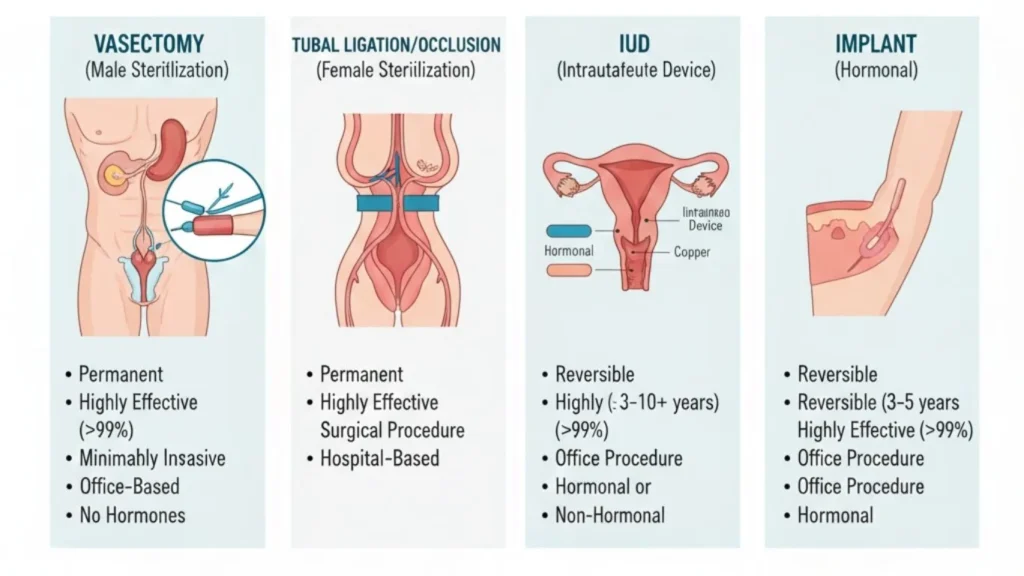
A vasectomy is a small surgical intervention aimed at making men have permanent contraception. It acts by making sperm not mix with semen; therefore, ejaculation still takes place, but no sperm is present. A vasectomy is a permanent contraception that requires no daily or monthly upkeep since post-procedure testing proves that it works.
Conception of Alternative Birth Control Methods
There is a great variety of both temporary and long-term contraception techniques to which women are exposed to other contraception methods. These procedures may include hormones, mechanical obstacles, or implantation. Most of them are effective, although some may necessitate that they be used regularly, monitored, or that hormonal side effects be accepted.
This comparison is aimed at assisting couples during the assessment of effectiveness, safety, lifestyle factors, and the suitability of the long term.
Advantages and Significance of Comparing Alternatives
Long-Term Effectiveness
One of the most crucial aspects in selecting a contraception is effectiveness. The best birth control method that is most effective, to the extent that it is proven to work, has a much lower rate of failure compared to most of the temporary methods.
Substitutes like pills or condoms can be highly effective in their use, but they are more prone to causing errors. Missed doses, wrong use or inconsistency of application may decrease reliability with time.
Cooperation Between Spouses
Traditionally, women have dealt with contraception to a great extent. Vasectomy provides couples with an opportunity to distribute responsibility and transfer long-term contraception to the male partner after making final decisions regarding childbearing. This is seen by many couples as a supportive and equal way of reproductive health.
Lifestyle Simplicity and Convenience
Temporary methods of birth control may need to be attended to daily, or they may have to be replaced regularly. Vasectomy also removes the burden of continuous contraception control that many couples find makes their lives easier and their minds less burdened.
Health and Hormonal Sensitivity
Some may have hormonal birth control that has side effects such as mood changes, headaches, nausea or libido change. The comparison of options is an attempt to enable the couples to select an approach that fits their physical comfort and long-term health interests.
Procedure or Steps Involved in Various Birth Control Methods
Vasectomy Process
Initial Consultation
It starts with a consultation at the end of which the doctor determines the medical appropriateness and talks about long-term plans. This commitment would make the decision consistent with the future plans of the patient and make vasectomy a good opportunity.
The Procedure
The actual procedure of vasectomy is normally short and carried out under local anesthesia. Patients are usually discharged the same day, and most of them can resume normal activities soon.
Recovery and Follow-Up
The recovery is normally accompanied by light pain for a brief period. Seminars should be followed up with semen testing to ensure that the process has been successful, and then trust it as a method of contraception.
Hormonal Birth Control Methods
Pills, Patches and Injections
Schedules need to be followed in hormonal techniques. Pills should be used daily, patches should be changed every week, and injections should be performed after certain time intervals.
Monitoring Side Effects
Other people can easily handle hormones, but others suffer side effects that can necessitate a change in approach or withdrawal. Consistent follow-ups may be required.
Intrauterine Devices (IUDs)
Insertion and Duration
The IUDs are implanted by a medical practitioner and might last a number of years. They are regarded as long-acting yet reversible contraception.
Maintenance and Removal
Low maintenance notwithstanding, IUDs, however, must be periodically checked and removed or replaced, which can be uncomfortable.
Barrier Methods
Physical Barriers and Condoms
Protective measures have to be employed properly in every sexual process. Although they provide freedom and prevent STIs, they are not as effective in preventing pregnancy when used not regularly.
Accessibility
These are more accessible and do not involve medical interventions and therefore are attractive as short-term or situational.
Female Sterilisation
Surgical Nature
Female sterilisation is an irreversible operation that involves surgery, which has more risks and a longer recovery period than vasectomy.
Comparison to Vasectomy
Vasectomy has been suggested by many healthcare providers as a safer and less invasive permanent mode of birth control when couples are deciding between the two.
Safety, Risks, and Common Misconceptions
Vasectomy: A Safe Surgery?
Vasectomy is not considered very dangerous when it is done by competent clinicians. The complications are rare and tend to be minor in nature, including temporary swelling or pain.
Myth: Vasectomy Is Reversible at All Times
Vasectomy should be made permanent, though there have been reversal procedures. Reversals are not assured and lose their success with time.
Myth: Vasectomy Sexual Performance
Vasectomy does not affect testosterone levels, erections, ejaculation, or sexual desire. The sexual performance and satisfaction usually do not change.
Comparing Hormonal Risks
Hormonal birth control has possible risks in relation to personal health conditions. These risks, compared to the small long-term physical effects of vasectomy, would aid couples in making informed choices.
Who Must Take Each of the Options?
Couples Who Have Completed Their Family
Vasectomy is a good, stress-free choice for couples who are quite sure that they do not want to have any more children.
Couples Looking to Have a Hormone-Free Birth Control
Vasectomy and barrier methods can be a better choice than hormone-based methods due to the desire not to experience hormone side effects.
Couples Who Intend Future Fertility
Less permanent and invertible strategies are more appropriate for couples who might be interested in having kids at a later stage.
Couples Who Are Long-Term Convenienceists
Vasectomy is a procedure that is attractive to couples who will not consider the use of contraceptives in the long run.
Summary or Conclusion
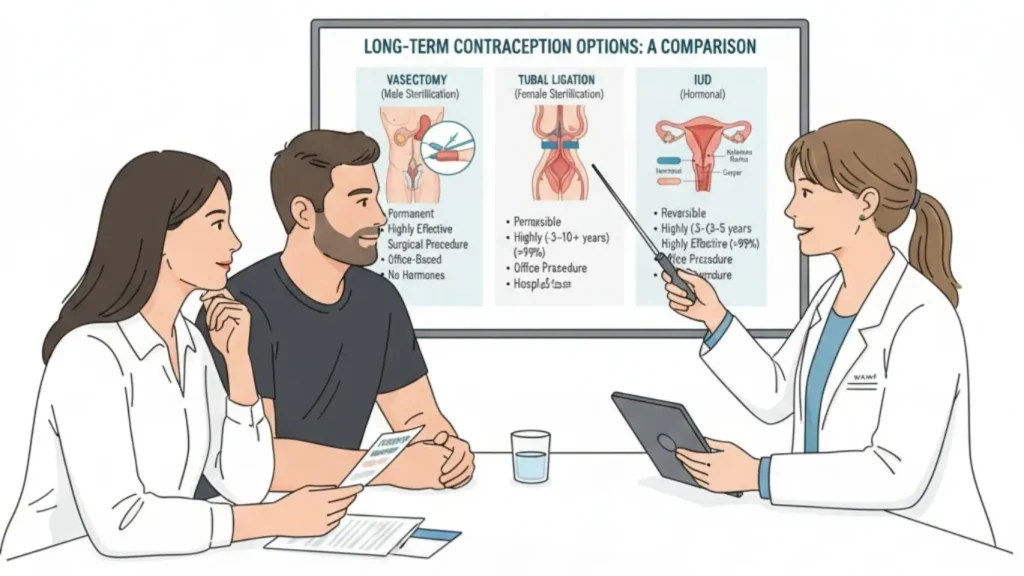
The question of whether to undergo through vasectomy or opt to use other birth control methods is a serious issue that needs to be discussed thoroughly and provided with correct information. Although temporary methods are flexible, they can entail continuous activity, side effects and a higher occurrence of failure since they are not used regularly. Vasectomy is one of the most efficient and low-maintenance types of male contraception, where the person is sure that his family is complete.
All couples have unique needs and conditions, and the most effective option relies on health, lifestyle, and future objectives. Open dialogue between the partners and professional medical advice are imperative in such a confident decision. To benefit the discussion of the procedure, recovery and suitability further, head into our primary guide to see the whole picture as the vasectomy in Canberra is detailed.
FAQs
Is Vasectomy Safer as Compared to Female Sterilisation?
Yes. Vasectomy is usually less destructive, less risky and with a shorter recovery period compared with female sterilisation. Vasectomy is the safer method of permanent contraception for couples interested in having such.
Which Is the Most Effective Way to Use a Vasectomy?
Vasectomy is one of the surest birth control measures, once proven to be effective. The temporary solutions are effective but also dependent on the regular and proper use, which enhances the possibility of failure in the long run.
Are Other Methods of Contraception Applicable to Couples Who Have Undergone Vasectomy?
Yes. Alternate contraception should then be employed until the test of semen reveals that the vasectomy is working. Having been confirmed, further contraception is normally not needed unless it is necessary to have protection against infections.
Are Sexually Transmitted Diseases Prevented by Vasectomy?
Nor. Vasectomy does not avert pregnancy. Protection against sexually transmitted diseases still requires the use of condoms.
What Is the Best Choice of Birth Control Among Couples?
Couples must consider health, family planning, hormone tolerance, and permanency. The consultation of a licensed medical worker will aid in making a well-informed and proper one.
Contact Information
Phone: 02 6100 9956
Email: reception@greenwaymedicalcentre.com.au
Address: Unit 6/175 Anketell Street, Greenway ACT 2900
Website: https://canberravvasectomyclinic.com.au