

The Vasectomy Procedure Explained-of the first appointment to final test
Choosing permanent contraception aka vasectomy is a huge life choice and for many men, knowing their way around each step clearly before the process goes to the next phase is crucial. This article gives a full, step-by-step explanation of the process of vasectomy, from the first visit to the last visit (the actual return examination test to see that you are successful) for the final semen test.
This is the long-form guide that is designed to provide answers to some common questions and eliminate any uncertainty and to help men feel confident and informed. Whether you are looking at a vasectomy now, or just want to learn about it, this article helps you go through the entire vasectomy procedure in simple language.
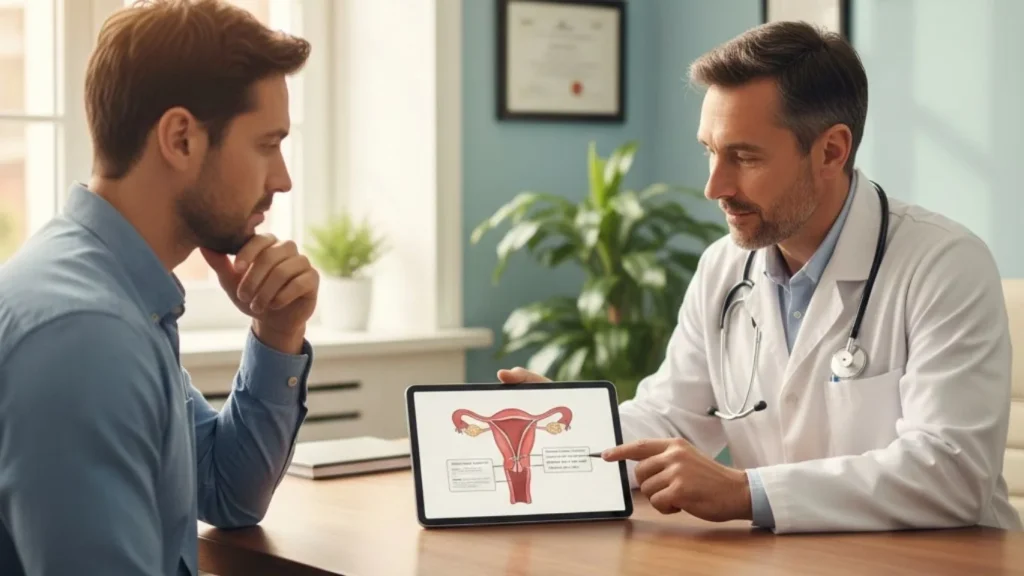
What Is the Vasectomy Procedure And Why Men Choose It
The vasectomy procedure is a minor surgical method of male sterilisation, which prevents sperm from mixing with semen when ejaculation takes place. It is one of the most efficient forms of contraception that exists and is chosen by men who are sure they don’t want biological children in the future.
Unlike temporary methods of contraception, vasectomy is supposed to be permanent. For this reason, education and informed consent is a critical part of the process.
Key reasons men choose vasectomy include:
- Long-term reliability without ongoing effort
- Freedom from daily or partner-dependent contraception
- No effect on testosterone or sexual performance
- Quick procedure with minimal recovery time
Men frequently opt for the vasectomy after they have finished a family or when you and the guys decide to opt for contraception forever.
Understanding the Vasectomy Procedure
In order to understand the procedure of vasectomy, it is helpful to understand how sperm move in a normal manner. The testicles produce sperm which travel through two tiny tubes known as the vas deferens. During ejaculation, both body fluids (sperm and seminal fluid) combine to produce semen.
The way this works is by blocking or sealing these tubes so that the sperm will not be able to travel to the semen anymore.
What is the fate of sperm following vasectomy?
- Sperm production which continues normally
- The body easily absorbs old sperm
- Hormones and sexual functioning are not affected
This means that ejaculation has the same appearance and feel, but there are no sperm in the semen.
The First Vasectomy Appointment: What to Expect
The journey is started with a special vasectomy appointment which is sometimes called a consultation. This visit is just as important as the procedure itself.
What the consultation entails:
- Review of medical history
- Discussion of irreversibility of vasectomy
- Explanation of risks, benefits & alternatives
- Opportunity to ask personal questions
The doctor makes sure that the patient understands the long-term implications and makes sure that the decision is voluntary and informed.
Common topics discussed:
- Family planning status
- Previous surgeries or conditions
- Medicinals or bleeding risks
- Recovery expectations
This appointment is useful to ensure the vasectomy procedure is appropriate to the individual.
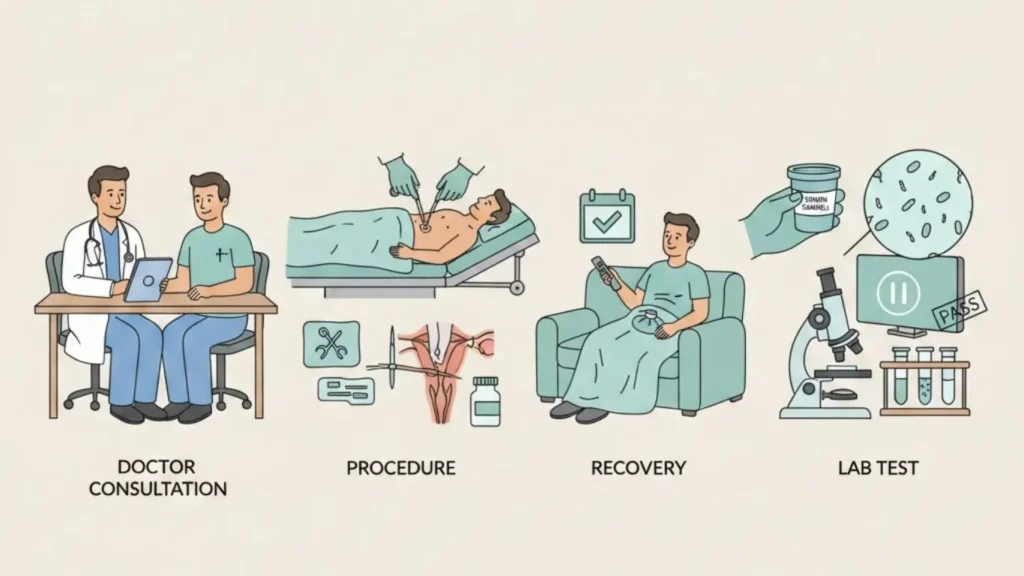
Preparing for the Vasectomy Procedure
Preparation is easy – but is important. Proper preparation has a way of reducing the discomfort and also enabling the procedure to be smooth.
Common preparation steps are:
- Exquisite showering on the day
- Shaving or trimming the scrotum if recommended
- Wearing a type of supportive underwear
- Arranging transport home
Sufferers are often told to revert from an aspirin or blood thinning drug for a few days before undergoing the procedure unless otherwise instructed.
Mental preparation is also of great importance. By knowing something is going to happen, less anxiety sets in, and will keep men more relaxed on the day.
Step-By-Step Analysis of the procedure of vasectomy
The procedure of vasectomy is usually under 15-30 min, and is performed under local anaesthetic.
Step 1: Local anaesthetic
A small injection is given for the purpose of numbness in the scrotal area. This keeps the discomfort during the procedure down to a minimum.
Step 2: The access for the vas deferens
A small incision is made in order to reach the vas deferens. Modern techniques minimize tissue disruption.
Step 3: Blocking the tubes
Each vas deferens is sealed (it is done in two ways: cauterisation or ligation) using surgical methods.
Step 4: Closure
The opening is closed either in effect by nature or with minimal suturing.
The patient remains awake but comfortable throughout, and pain is typically described as mild pressure rather than sharp discomfort.
Modern Methods Employed in the Vasectomy Surgery
Advances in medical techniques have caused the procedure of vasectomy to be safer and less painful than ever before.
Common methods that have been developed in modern times are:
- No-scalpel vasectomy
- Minimally invasive access
- Better sealing techniques
These approaches reduce:
- Bleeding
- Infection risk
- Recovery time
Most men go home soon after the procedure and resume light activities in a day or two.
Immediately After the Vasectomy procedure
After the procedure, patients are monitored for a short time after which they are discharged.
Normal post procedure experiences:
- Mild swelling or bruising
- Slight discomfort experienced in a few days
- Sensitivity in the scrotum region
Recommended aftercare:
- Rest for 24-48 hours
- Apply ice packs intermittently
- Wear supportive underwear
- Avoid heavy lifting
Pain relief tends to be handled by taking relatively simple over-the-counter medication.
Vasectomy Aftercare and Recovery Timeline
Vasectomy aftercare plays a vital role in the smooth medical healing.
First week:
- Avoid strenuous activity
- Return to desk work (if comfortable)
- Keep the area clean and dry
Weeks 2-4:
- Gradual return to exercise
- Sexual activity may be resumed when comfortable
- Continue contraception
Although the vasectomy procedure prevents the transport of sperm, there are pre-existing sperm that may still be present for several weeks.
When Vasectomy Proved to be Effective
One of the most popular misconceptions regards the use of vasectomy, which is the need for it to work immediately. In the actual context, it is only after the follow-up testing that the effectiveness will be confirmed.
Why testing matters:
- Residual sperm can remain
- Contraception is still required in the beginning
- Confirmation to ensure safety
Most doctors suggest doing a semen analysis several weeks after the procedure.
The Final Test After the Vasectomy Procedure
The last step in the vasectomy process is known as the post-vasectomy semen test.
What the test checks:
- Presence or absence of sperm
- Confirmation of sterility
Once the results are confirmed to show the absence of sperm, the vasectomy procedure is considered a success.
Until then alternative contraception must continue.
Common Myths About the Vasectomy Procedure
A lot of men postpone vasectomy because of misinformation.
Common myths include:
- Vasectomy is a blow to masculinity
- Testosterone levels drop
- Sexual pleasure decreases
In fact, the medical evidence indicates that vasectomy has no effect on hormone levels, erections or sexual desire.

Long Term Results of the Vasectomy Procedure
Vasectomy is among the most sure-fire contraceptive methods available.
Long-term benefits:
- Over 99% effectiveness
- No ongoing costs
- No daily effort
Complications are seldom and typically minor if instructions for aftercare are adhered to.
Is vasectomy Procedure being Reversible?
Although there are reversal procedures, vasectomy should always be considered to be permanent.
Important considerations:
- Lack of guarantee of reversal success
- Cost and Complicatedness Higher
- Fertility not necessarily fully return
This makes it even more important to clearly be sure before going forward.
Frequently Asked Questions About Vasectomy Procedure
1. Is the vasectomy procedure painful?
Most men defend little discomfort while having the vasectomy operation done. Local anaesthetic is an effective way of numbing the area, and seems to be described in terms of pressure rather than pain. Mild soreness afterwards is common but usually goes away in a couple of days with rest and simple pain relief.
2. How long does it take to have a vasectomy?
The procedure which involves vasectomy typically takes between 15 and 30 minutes. Including preparation and recovery time, time taken for most appointments is less than an hour and patients can go home the same day.
3. Will the vasectomy procedure affect sexual performance?
No. The vasectomy procedure does not impact on testosterone, erections, ejaculation or sexual desire. Sexual function is Unexplained once recovery is complete.
4. When can I resume work after the vasectomy procedure?
Many men come back to sitting at work in one to two days. Physically demanding jobs may initiate a need for more resting. Following so-called aftercare advice helps to ensure a quicker recovery.
5. How successful is the operation of vasectomy?
Once verified through a semen test, vasectomy procedure is over 99% effective at preventing pregnancy and is thus one of the best form of contraception that’s available.
6. Is vasectomy procedure safe for a long period of time?
Yes. Extensive research has proved that there is no higher risk of cancer or heart diseases or hormonal problems after the vasectomy procedure when done with the help of a qualified doctor.
7. Do I need contraception after the vasectomy procedure?
Yes, until semen test confirms there is no sperm present. This normally takes several weeks and alternative contraception needs to be used.
Canberra Vasectomy Clinic
Canberra Vasectomy Clinic offers safety, modern and evidence-based methods of vasectomy, which has made it the safest, most advanced, and confident choice in case you want to pursue a vasectomy.Find time to book a confidential consultation today and make the next step again with sanity and calmness.
| Canberra Vasectomy Clinic- Green Way | Canberra Vasectomy Clinic- Molonglo Valley |
| Phone:02 6100 9956 | Phone: (02) 5110 3155 |
| Email:reception@greenwaymedicalcentre.com.au | Email: reception@greenwaymedicalcentre.com.au |
| Address: Unit 6/175 Anketell Street, Greenway ACT 2900 | Address: 110 Woodberry Ave Coombs ACT 2611 |
| Website: https://canberravvasectomyclinic.com.au | Website: https://canberravvasectomyclinic.com.au |