
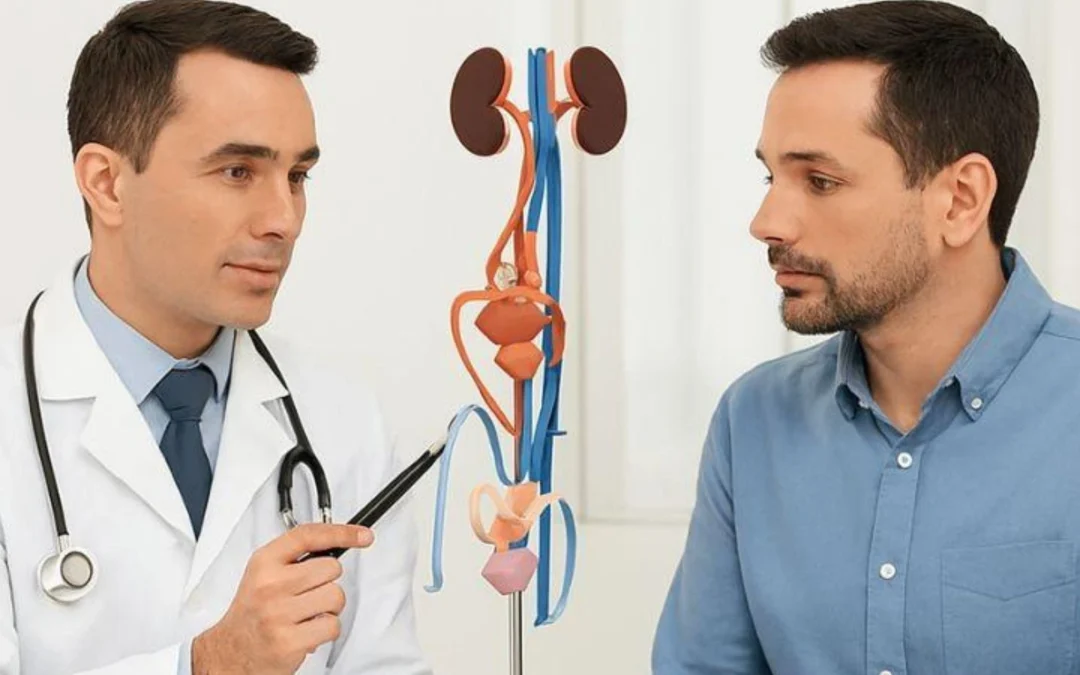
A vasectomy is a common permanent contraception option for men who have decided they do not want to father children in the future. Although the procedure itself is usually straightforward, knowing when you can safely return to sexual activity is an important part of recovery.
Many men ask about sex after vasectomy, including when they can have intercourse, whether ejaculation is safe, whether sex can cause pain, and when a vasectomy becomes effective as contraception.
In general, sexual activity should be avoided for several days after the procedure while the treated area begins to heal. Healthdirect advises avoiding ejaculation for around 5 to 7 days after a bilateral vasectomy, although your own doctor may recommend a different timeframe depending on your recovery and the technique used.
For men considering vasectomy in Canberra, understanding the difference between recovering from the procedure and becoming fully protected from pregnancy is especially important. Being physically ready for sex does not necessarily mean that the vasectomy is already effective.
Why Do You Need to Wait Before Having Sex?

Vasectomy is the surgical procedure in which the vas is cut and sealed, which normally transports sperm from the testicles. The procedure is quite small but tissues around the scrotum area require some time to heal.
For some men there is tenderness, bruising, swelling or discomfort right after surgery. During the early recovery stage it is recommended to rest and avoid unnecessary activities that may stress the area.
Sexual activity includes movement, muscle contractions and ejaculation. If you resume intercourse too quickly it can be uncomfortable and may hinder the healing process.
Thus, the answer to “can you have sex after vasectomy” is not just whether or not it’s possible, but whether your body is ready for it in a safe and comfortable manner.
Your doctor will give you particular post-procedure directions depending on your procedure.
When Can You Have Sex After Vasectomy?
Sex may resume about 5-7 days after the surgery if things are going well and there is no serious pain, swelling or other complications. Healthdirect has a specific recommendation to abstain from ejaculation for 5-7 days after bilateral vasectomy.
But this shouldn’t be considered as an “every-body” deadline.
Some men may feel comfortable to resume sexual activity after this time, others may require more time. If your scrotum is still tender or swollen, it might be more comfortable to wait longer.
It’s safest to follow your vasectomy doctor’s individual directions.
If sex is painful, stop and give yourself some time to heal. If symptoms get worse or last longer than usual, talk with your doctor about them, don’t just put them aside.
Does Ejaculation Affect Vasectomy Recovery?
One of the primary reasons for doctors’ recommendation of ‘waiting’ during the early stages of recovery is the issue of ejaculation.
About the time of ejaculation, the muscles that are part of the reproductive system contract. While a vasectomy will not be undone by the act of ejaculation, it is possible that the act of ejaculation may cause discomfort during the healing process of the vas if it occurs too soon following the surgery.
Following the initial recovery period, ejaculation is usually a part of the clearing out of the remaining sperm from the reproductive tract.
Importantly, when a man has an ejaculation following a vasectomy, this doesn’t automatically imply that the ejaculate is sperm-free. Sperm can stay in the vas, and other parts of the reproductive tract, for a period of time after the procedure.
That’s why sexual activity and contraceptive effectiveness go hand in hand.
Can You Get Pregnant After Sex Following a Vasectomy?
Yes. Even when the doctor has performed the vasectomy, but not yet confirmed that the procedure has been successful in removing sperm from the semen, you may become pregnant if you have unprotected sex.
Though very effective, a vasectomy will not be effective immediately following the surgery. Sperm can remain in the tubes for several months up to about 20 times after he ejaculates, Healthdirect explains.
Therefore couples are advised to use another method of contraception until the appropriate semen test has been performed to confirm that contraception can be discontinued.
One of the most crucial points to remember when planning sex after vasectomy is the distinction.
If a woman feels well, she does not necessarily have pregnancy protection.
When Does a Vasectomy Become Effective?
This varies from person to person since the process of the sperm being cleared is not immediate.
Semen can contain sperm for some time after a vasectomy. Sperm continues to be made in the testicles, but the sperm is no longer able to pass through the blocked and sealed vas.
Healthdirect reports that a sperm test is done following the procedure to see if it is safe to discontinue the other type of contraception. It is currently advised that this test is performed about three months after vasectomy and other clinical guidelines may recommend a specific number of ejaculations or a different testing schedule.
Your own clinic will instruct you on the exact time and method of sending your semen sample.
Continue taking contraceptives until you get confirmation from your health care provider.
What Does Sex Feel Like After a Vasectomy?
After the first healing stage, most men get back to their normal sexual routine.
A vasectomy will not cause the removal of testicles or stop the production of testosterone. It doesn’t either typically stop erections, orgasm or ejaculation. According to Healthdirect, vasectomy does not affect libido nor do it affect testosterone levels.
Even after a vasectomy, semen will still be produced as the majority of the fluid is derived from certain glands (prostate and seminal vesicles). The procedure blocks the sperm from getting into the semen.
As a result, the physical sensation of sex and ejaculation is typically anticipated to stay comparable.
Men might be slightly anxious at first, after surgery, about having sex. Slowly and talking with your partner can make the activity more comfortable to resume.
What If Sex Is Painful After Vasectomy?
There may be some tenderness during the early recovery, but if there is a lot of pain or it lasts for longer than it should, it is not a normal occurrence.
If there is a decrease in sexual activity and discomfort is felt, you should reconsider if sex should resume and give it more time to heal. Pressure on the scrotum and recovery guidelines from your clinic can help.
You should call a doctor or a medical service line if your pain remains and does not get better, there is a lot of swelling, there is a lot of bruising or a lot of redness around the area where surgery was performed.
Sexual intercourse may also be painful for reasons other than those related to the vas. If the pain persists beyond that normal healing time, a physical examination may be needed to find the cause.
When Should You Avoid Sex for Longer?
There are cases where it might be appropriate to stay longer than the typical recovery time.
If you have any of the following, you may need more time:
- Significant scrotal tenderness
- Increasing swelling
- Persistent bleeding
- Significant bruising
- Redness around wound or incision
- Increasing pain, not getting better.
- Any other symptom that your doctor has let you know to keep an eye on
The calendar is not the only consideration when it comes to when you start making love again; it is a personal thing.
When in doubt, it’s best to get in touch with your Canberra vasectomy clinic for individual aftercare suggestions rather than making your own guesses.
You should try to refrain from sex, masturbation or ejaculation for at least six months after the vasectomy.
The same general recovery principle is valid for masturbation because it is a form of ejaculation.
Your doctor might suggest not having any ejaculations for the first few days after surgery. After the initial recovery period, you should be able to resume ejaculation as directed by your medical team.
Masturbation can also help remove any residual sperm from the reproductive tract, but should not be considered as an alternative to the necessary semen analysis.
What matters is not the number of ejaculations, but whether their number leads to the contraceptive being successful or not. Additional contraception can be discontinued when as determined by your semen test and your health care provider’s instructions.
Sex, Masturbation and Ejaculation After Vasectomy
Normally, a successful vasectomy will not be affected if the patient resumes sexual activity after the recommended recovery period.
This is accomplished during the procedure by blocking the passage of sperm in the vas. Sex does not “rejoin” those tubes.
But it is rare for a vas to fail. Sometimes, the vas may re-join and cause pregnancy, says Healthdirect.
This is one more incentive for follow-up testing.
Don’t assume it is working just because you are feeling better or it seems to look and feel normal; wait for confirmation from your health care provider.
Does Sex After Vasectomy Affect the Success of the Procedure?
Normal sexual activity after the recommended recovery period does not ordinarily make a successfully performed vasectomy ineffective.
The procedure works by preventing sperm from travelling through the vas deferens. Having sex does not reconnect those tubes.
However, vasectomy failure can rarely occur. Healthdirect notes that the vas deferens can occasionally reconnect, which can result in pregnancy.
This is another reason why follow-up testing matters.
Rather than assuming that the operation has worked because you feel well or because ejaculation appears normal, wait for confirmation from your healthcare provider.
Why Semen Testing Matters After Vasectomy
One of the biggest misconceptions about sex after vasectomy is that the procedure provides immediate contraception.
It does not.
The reproductive system needs time to clear sperm that were already present beyond the point where the vas deferens was treated. The semen can look normal even while sperm are still present.
A semen analysis provides objective information about whether sperm remain.
Healthdirect recommends continuing another contraceptive method until testing confirms that the vasectomy has been successful.
Following this step is essential if pregnancy prevention is the reason for having the procedure.
Sex After Vasectomy and STI Protection
The purpose of a vasectomy is to stop pregnancy. Does not prevent sexually transmitted infections.
Condoms may still be needed after vasectomy if there is any risk of exposure to an STI. Healthdirect also explicitly mentions that having a vasectomy won’t prevent the spread of HIV or other STIs.
This indicates that prevention of contraception and STIs should be separated.
Mutual monogamy relationship may have different contraception arrangements for couples where appropriate, who have been tested for STI’s. It is not suitable to use a vasectomy as a replacement for condoms if protection against STIs is required, however.
Returning to Sex After Vasectomy in Canberra
Men planning vasectomy in Canberra may have questions about recovery before choosing a clinic or booking their procedure.
A consultation with a qualified medical practitioner gives you an opportunity to discuss the procedure, expected recovery, sexual activity, contraception and follow-up testing.
When comparing the best vasectomy doctors Canberra Australia, consider whether the provider clearly explains aftercare and gives you instructions about when to resume normal activities and how post-vasectomy semen testing will be managed.
A dedicated vasectomy clinic in Canberra can also provide information specific to the procedure and help you understand what to expect before and after treatment.
Tips for a Comfortable Return to Sexual Activity
If your doctor tells you it’s safe to resume sexual activity, it might be easier if you start slowly.
Wait until you are physically comfortable to begin. Don’t activities that put unnecessary pressure on the scrotum and note any pain or changes in the body.
Talk with your partner can also be helpful. You might want to inform them that the surgery has been performed, but that you should still take contraceptive precautions until the semen test to see if the sperm have been cleared.
Most importantly, do not rush your recovery just because it’s a certain number of days.
Guidance from your body’s recovery, and your doctor should determine when you are ready to resume sexual activity.
The Difference Between Recovery and Contraceptive Protection
After a vasectomy, there are 2 different milestones.
The first step is the physical recovery. This is when the surgical site is well-healed enough to return to normal life as advised by your physician including sexual activity.
Second is contraceptive clearance. The follow-up semen test can confirm that the vasectomy is working as a contraceptive.
Milestones may not occur in any specific sequence.
A few days after you’re physically ready for sex, you might still need to use another contraceptive for weeks or months.
Knowing this distinction is one of the most frequent errors following the vasectomy reversal procedure: thinking that the man is protected after the procedure and can resume sexual activity immediately.
Conclusion
The recovery period can be handled better if you know how long after a vasectomy it takes to have sex again. Men are not supposed to ejaculate for approximately 5-7 days in many cases, but this period may vary based on each man’s recovery and treatment directions from the doctor.
More crucial is the fact that readiness for sex is not the same as protection in case of pregnancy. After vasectomy there may be some time for sperm to remain in the reproductive tract, therefore another contraceptive method must be used until there is follow up testing of semen that confirms vasectomy has been successful.
Talking to a knowledgeable medical professional will help you to understand the recovery, sexual activity, semen analysis and long-term contraception before deciding on a vasectomy in Canberra.
FAQs
Q1. How many days should you wait before having sex after a vasectomy?
Many men are advised to avoid ejaculation for about 5 to 7 days following vasectomy. However, the exact timeframe depends on healing and your doctor’s instructions. If you still have significant pain, swelling or tenderness, you may need to wait longer. Follow your individual aftercare instructions rather than relying only on a standard timeframe.
Q2. Can you have unprotected sex after a vasectomy?
You should not rely on the vasectomy immediately after the procedure. Sperm can remain in the reproductive tract for weeks or months, meaning pregnancy remains possible. Continue using another contraceptive method until your follow-up semen analysis confirms that sperm have cleared sufficiently and your doctor tells you that additional contraception is no longer required.
Q3. Does ejaculation hurt after a vasectomy?
Some men may experience temporary discomfort when they first resume ejaculation because the tissues are still recovering. If ejaculation causes significant or persistent pain, stop and speak with your doctor. Severe pain, significant swelling, increasing redness or other concerning symptoms should be medically assessed rather than assumed to be a normal part of recovery.
Q4. Will sex feel different after a vasectomy?
A vasectomy is not expected to remove the ability to have erections, orgasm or ejaculation. Testosterone and libido are also not normally affected by the procedure. Semen continues to be produced, but sperm are prevented from travelling through the vas deferens. Once recovery is complete, sexual activity can generally return to normal.
Q5. Does a vasectomy protect against sexually transmitted infections?
No. A vasectomy is designed to prevent pregnancy and does not protect against HIV or other sexually transmitted infections. If there is a risk of STI transmission, appropriate barrier protection such as condoms may still be needed. Vasectomy and STI prevention serve different purposes, so both should be considered when making decisions about sexual health.
Ready to Take the Next Step?
Book a consultation with Canberra Vasectomy Clinic to discuss your vasectomy, recovery and aftercare with an experienced medical team.
| Canberra Vasectomy Clinic- Green Way | Canberra Vasectomy Clinic- Molonglo Valley |
| Phone: (02) 5114 3510 | Phone: (02) 5114 3510 |
| Email:reception@greenwaymedicalcentre.com.au | Email: reception@greenwaymedicalcentre.com.au |
| Address: Unit 6/175 Anketell Street, Greenway ACT 2900 | Address: 110 Woodberry Ave Coombs ACT 2611 |
| Website:https://canberravvasectomyclinic.com.au | Website:https://canberravvasectomyclinic.com.au |