

Making a permanent decision is not something which most men take lightly.
For a number of Canberra men thinking about having a vasectomy, it is not so much the procedure itself-prepared as they are to have it-that worries them, but what can happen years or decades down the track.
Questions such as “Does vasectomy cancer or heart disease risk?” These are quite common and understandably so. Over the years, myths, outdated studies, and slackballs online have caused an unnecessary fear of the safety of vasectomy.
This article offers a good, evidenced-based, answer to these concerns. We’ll look to see what modern medical research actually says about Vasectomy and Long Term Health, including Cancer and Heart Disease Risk So That You Can Make A Confident, Informed Decision!
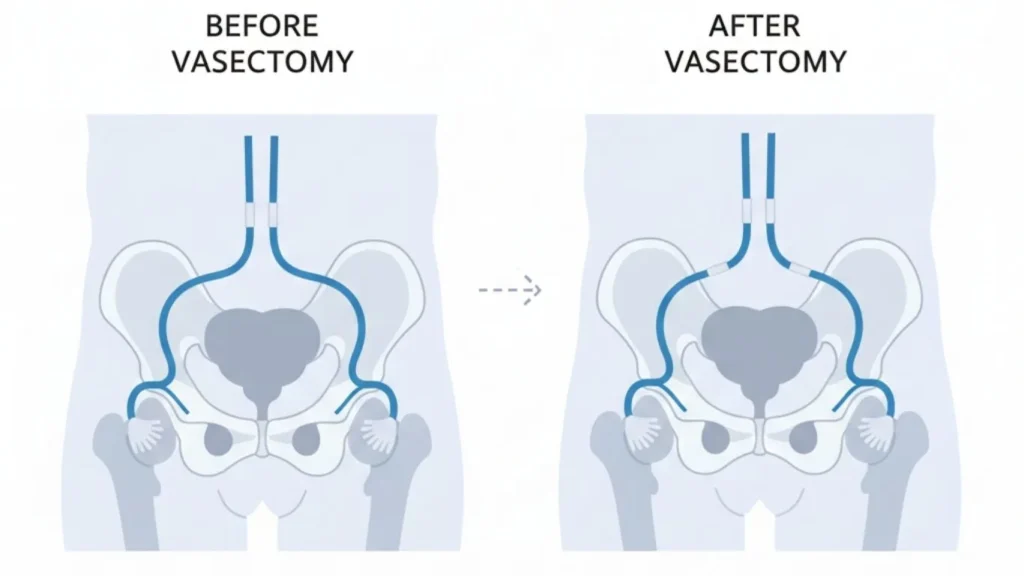
Understanding Vasectomy: A Quick Medical Overview
A vasectomy is a simple surgery that involves preventing the mixing of sperm with semen during the ejection. It works by blocking or sealing the vas deferens — the tubes that carry sperm from the testicles.
What a Vasectomy Does:
- Prevents sperms from entering the semen
- Does not affect the levels of testosterone
- Does not affect erections, orgasm and libido
- Does not interfere with urine flow and hormones
Modern vasectomy procedures, practiced in Australia, are highly refined, low risk, and have been developed so that the complications and risks over the long term are reduced.
Why Cancer and Heart Disease Was a Problem
The notion that vasectomy may promote cancer or heart disease risk familiar came out of the blue. During the 1980s and 1990s, some early observational studies raised concerns about potential relationships between vasectomy and prostate cancer.
These findings were amplified in media headlines, but something that hardly gets apparent is that:
- These early studies had limitations in the design department
- Many did not account for age, screening frequency and lifestyle issues
- In later larger studies these risks could not be confirmed
Medical knowledge has come a long way since then.
Is Vasectomy Increasing the Risk of Cancer?
The Short Answer:
No. Based on available current medical evidence in the field there is absolutely no causal correlation between vasectomy and cancer.
Let’s break down this by type of cancer.
Vasectomy and Cancer Prevention of the Prostate
Prostate cancer is the most common issue when men want to know a simple answer to the question, Does vasectomy increase cancer risk?
What Modern Research Shows:
- Large population studies of hundreds and even thousands of such men, because they did not find any meaningful increased risk of developing prostate cancer
- no proven biological mechanism that links vasectomy and prostate cancer
- Differences found in earlier studies were mostly related to detection bias
Detection Bias Explained:
Men who decide to have vasectomy tend to be more proactive with healthcare. This means:
- More regular GP visits
- More PSA testing
- Increased potential of early prostate cancer detection
This does mean that cancer is more likely to be diagnosed, not to happen more.

Vasectomy and Testicular cancer
Another concern that is often raised is testicular cancer.
Medical Consensus:
- Extensive studies have revealed that there is not an association between vasectomy and testicular cancer
- Risk factors for testicular cancer include genetics, undescended testicles – not vasectomy
Major urological associations throughout the world agree that vasectomy does not raise the risk of testicular cancer.
Vasectomy and Other Cancers
Research has also looked at possible associations with:
- Bladder cancer
- Colorectal cancer
- Other hormone related cancers
Findings:
There is no credible evidence of any correlation between vasectomy and any other cancer type.
Is Vasectomy increasing the heart disease risk?
Heart disease is another long-term health concern that men are concerned with when researching the safety of vasectomy.
The Evidence Is Clear:
Vasectomy does not raise the risk of heart disease, stroke and cardiovascular events.
Why This Myth Exists
Previous theories had said vasectomy could:
- Trigger immune responses
- Affect cholesterol levels
- Influence cardiovascular health
However, long-term comprehensive studies have proved:
- No increase in heart attacks
- No increase in stroke
- No increase in issues with blood pressure
Modern medical consensus is that vasectomy is not another negative effect on cardiovascular health.
Vasectomy Safety: What the Medical Community Consents To
Global Medical Authorities Agree:
- Vasectomy – it is one of the safest methods of permanent contraception
- It has fewer long-term risks than female sterilisation
- It does no influence on life expectancy and chronic diseases risk
Organisations that work in support of the safety of vasectomy include:
- Royal Australian College Of General Practitioners (RACGP)
- Organization World Health Organization (WHO)
- Urological societies throughout the world
Understanding Side Effects of Vasectomy (Short vs Long Term)
While vasectomy has no effect on susceptibility to cancer and heart disease, it’s still important to know what are the realistic side effects.
Short-Term Side Effects:
- Mild swelling
- Bruising
- Temporary discomfort
- Minor bleeding
These are normally gone in days to weeks time.
Long-Term Vasectomy Side Effects: What’s Real.
Possible Long-Term Effects:
- Chronic pain in the scrotum (rare)
- Sperm granuloma (a small lump, normally painless)
- Temporary sensitivity changes
What Is Not a Long-Term Side Effect:
- Cancer
- Heart disease
- Hormonal imbalance
- Erectile dysfunction
Why Vasectomy Is Not Associated with Cannabinoids and Hormones Nor Heart
A vasectomy only works to prevent the transport of sperm. It does not:
- Interfere with the production of testosterone
- Affect the endocrine system
- Change the metabolism of cholesterol.
- Change how your blood flows or your heart works
Testosterone is still secreted into the bloodstream just as it used to be.
Isolate This Quiz to Assess Your Knowledge: Myths About Vasectomy and Only Admitted Victims Are Paradox About Map Skills Magnetic – Vasectomy Myths vs Surgical Facts of Analogous
Myth 1: Vasectomy is responsible for prostate cancer
Fact: There is no proven causal relationship.
Myth 2: Vasectomy raises risk for heart disease
Fact: Cardiovascular impact is shown in no long term studies.
Myth 3: Vasectomy reduces the immune system
Fact: The immune response then to sperm is localized and nonproblematic.
Myth 4: Vasectomy decreases life span
Fact: There is no difference in life expectancy.
Why Do Such Myths Persist on the Internet
- Outdated articles continue to be spread
- Misinterpretation of Early Studies
- Social media amplification
- Lack of medical context
This is imperative to consider when seeking the help of qualified clinicians, and not forums or clickbait headlines.
Is Vasectomy Safe to One’s Health Long-Term?
For the Canberra men asking them “Is vasectomy safe long term?” the answer is clear.
Long-Term Safety Summary:
- No increased cancer risk
- No increased risk of heart disease
- No hormonal disruption
- No effect on sexual performance (= function)
- No effect on general health
Vasectomy has been safely used throughout the world for decades.
Vasectomy When Compared to Other Contraceptive Measures
As compared to Female Hormonal Contraception:
- Fewer systemic side effects
- No increased clot or stroke risk
- No hormone exposure
Compared to Tubal Ligation:
- Lower complication rate
- Faster recovery
- Less invasive
From a risk-benefit standpoint, vasectomy is one of the safest forms of permanent status which can be had.

Psychological Peace of Mind Post vasectomy
Many men report:
- Reduced desire to get an unwanted pregnancy
- Improved sexual confidence
- Shared responsibility than partners
Knowing that vasectomy does not increase risk of cancer and heart diseases helps men to feel certain about their choice.
When Should You See a Specialist?
You should seek the care of a vasectomy expert if:
- You’re finished in having children
- You want something that is a permanent solution
- You’re worried about long term health-effects
- You want simple, evidence-based advice
A professional consultation means that your concerns are properly addressed without fear based mis-information.
Frequently Asked Questions: Vasectomy Cancer and heart disease
1: Foreign male sterilization (uscular): Does vasectomy increase the risk of prostate cancer?
No. Studies on a large scale can check absent relationship as causing. Increased detection in some studies was attributed to more frequent health screening and not increased rates of cancer.
2: Can vasectomy cause Heart disease in later life?
No. Studies done over a long-term period confirm that vasectomy does not increase the risk of heart attack, stroke or heart disease.
3: Does vasectomy have any impact on testosterone or hormones?
No. Testosterone production remains normal following vasectomy and is not affected in any way by the impact of hormone levels and male characteristics.
4: Are there any responses that are cancers associated with vasectomy?
No malignancies have been scientifically discovered to be related to vasectomy. This is confirmed by medical consensus not to be a cancer risk factor.
5: Is vasectomy safer than long term female contraception?
In many cases, yes. Vasectomy does not have the hormonal side effects, and has fewer long term systemic risks associated with these procedures.
6: Why are some websites today still communicating the risk of cancer?
Many use outdated research or misinterpret research. The current medical guidelines do not agree with these assertions.
7: Should Vasectomy be avoided by men with family history of cancer?
Family history of cancer does not change vasectomy safety No. Personally-Fmes should always discuss personal medical history with his/her doctor.
Making a Confident Decision
The fear that vasectomy causes an increase in risk of cancer or heart disease, in turn, have been well-investigated and refuted by modern medicine. For the men of Canberra, vasectomy is the safe, effective and responsible option in regard to permanent contraception.
Making decisions based on fact and not fear is important to long-term peace of mind.
Book an Appointment with Canberra Vasectomy Clinic
If you’re thinking about vasectomy and are looking for honest, science-backed advice, Canberra Vasectomy Clinic’s experienced team is here to help.
- Book your confidential consultation today
- Receive answers specific to your health
- Choose Clarity, Safety and Confidence
Canberra Vasectomy Clinic – Canberra men’s trusted care.
| Canberra Vasectomy Clinic- Green Way | Canberra Vasectomy Clinic- Molonglo Valley |
| Phone:02 6100 9956 | Phone: (02) 5110 3155 |
| Email:reception@greenwaymedicalcentre.com.au | Email: reception@greenwaymedicalcentre.com.au |
| Address: Unit 6/175 Anketell Street, Greenway ACT 2900 | Address: 110 Woodberry Ave Coombs ACT 2611 |
| Website: https://canberravvasectomyclinic.com.au | Website: https://canberravvasectomyclinic.com.au |